
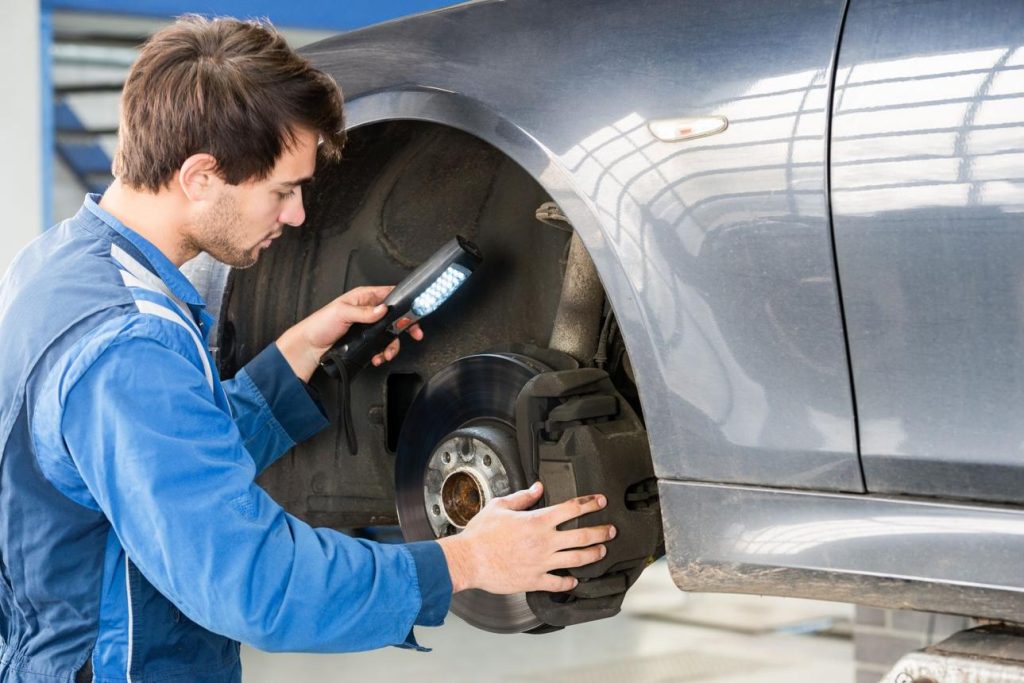
Your vehicle’s braking system is the single most important safety feature you have. Every time you press the pedal, dozens of components pads, rotors, calipers, brake lines, and fluid work together in a split second to bring thousands of pounds of moving metal to a safe stop. When any part of that system starts to fail, your car usually gives you a warning before it fails completely.
Unfortunately, many drivers ignore these warning signs until it’s too late. Small issues that could have been fixed with a simple brake pad replacement often turn into expensive rotor damage, caliper failure, or worse a complete loss of stopping power on the road.
Below, we break down the five most common signs your car needs brake service, why they happen, and what you should do about them. If you’re in the Traverse City area and notice any of these symptoms, the team at Cherry Capital Auto Clinic is ready to inspect your brakes and keep you safe on the road.
1. Squeaking or Grinding Noises When Braking
One of the earliest and most obvious signs your car needs brake service is unusual noise. A high-pitched squeal when you press the brake pedal is often intentional; most brake pads have a small metal wear indicator built in specifically to make this noise once the pad material gets thin. It’s your car’s way of telling you it’s time for a checkup.
If you ignore the squeal and keep driving, that sound can change into a deep, metallic grinding noise. This is a much more serious warning. Grinding typically means the brake pads have worn down completely, and metal is now scraping directly against the rotor. At this stage, you’re no longer just replacing pads; you’re likely looking at rotor resurfacing or full rotor replacement, which significantly increases the repair bill.
What to do: Don’t wait for grinding to start. As soon as you hear consistent squeaking, schedule a brake inspection. Catching worn pads early is one of the most affordable brake repairs you can make.
2. A Soft or Spongy Brake Pedal
Your brake pedal should feel firm and responsive every time you press it. If it suddenly feels soft, spongy, or sinks closer to the floor than usual before the car actually slows down, that’s a red flag that shouldn’t be ignored.
A spongy pedal is usually caused by one of a few issues:
- Air in the brake lines – Air compresses, unlike brake fluid, so it creates a “give” in the pedal.
- A brake fluid leak – Low fluid levels reduce hydraulic pressure, making the pedal feel loose.
- Worn-out brake lines or a failing master cylinder – Over time, rubber brake lines and seals degrade, leading to internal leaks.
This is one of the more serious signs that your car needs immediate brake service, as it directly affects your ability to stop the vehicle. A spongy pedal can mean partial brake failure is already happening, and it can worsen without warning.
What to do: If your pedal feels different than usual, especially if it goes lower than normal, have your brake system pressure-tested immediately. Don’t drive long distances or highway speeds until it’s checked.
3. The Vehicle Pulls to One Side While Braking
If your car veers left or right every time you brake, even on a flat, straight road, your braking system is not working evenly across all four wheels. This is a common but often overlooked warning sign.
Uneven braking can be caused by:
- A stuck or seized brake caliper on one wheel
- Uneven brake pad wear from side to side
- A collapsed brake hose restricting fluid flow to one wheel
- Contaminated brake fluid or oil on one set of pads
Beyond being inconvenient, pulling during braking is dangerous. It reduces your control over the vehicle, especially in wet or icy conditions common in northern Michigan winters, and it puts extra strain on your tires and suspension components.
What to do: Have a technician inspect each wheel individually. This issue almost always needs a hands-on diagnosis rather than a guess, since the cause can be on either the left or right side of the vehicle.
4. Vibrations in the Steering Wheel or Brake Pedal
Feeling a pulsing or vibrating sensation through the steering wheel or brake pedal when you slow down is one of the clearest signs your car needs brake service – specifically, it usually points to warped or unevenly worn brake rotors.
Rotors can warp from repeated heat cycles, such as riding the brakes down long hills or stop-and-go city driving. As the rotor surface becomes uneven, the brake pad makes inconsistent contact with it, which you feel as a shudder or pulsation, especially at highway speeds when braking hard.
While vibration alone isn’t usually an emergency, it’s a sign of ongoing damage. As a result, driving on warped rotors for too long accelerates wear on your pads, calipers, and even suspension bushings.
What to do: Have your rotors measured for thickness and runout. Depending on how much material remains, a technician can either resurface (turn) the rotors or recommend full replacement.
5. The Brake Warning Light Stays On
Modern vehicles are equipped with sensors specifically designed to monitor brake health, and the dashboard brake warning light is your first line of defense. If this light comes on and stays on, your car is telling you something needs attention right now.
The brake warning light can indicate several issues, including:
- Low brake fluid level
- Worn brake pads detected by an electronic sensor
- An issue with the ABS (anti-lock braking) system
- A problem with the parking brake
In addition, some vehicles pair the brake light with an ABS light. If both illuminate together, it often signals a more serious problem within the hydraulic or electronic braking system that requires professional diagnostic equipment to identify.
What to do: Never ignore an illuminated brake warning light, even if the car still seems to stop normally. Get it scanned and inspected as soon as possible; this is one of the clearest signs your car needs immediate brake service.
Why You Shouldn’t Wait to Get Your Brakes Checked
It’s tempting to put off a brake inspection, especially if the car still seems to “work fine.” However, brake problems rarely improve on their own; they get worse, and often quickly. What starts as a small squeak can turn into thousands of dollars in rotor, caliper, and brake line repairs. Worse, a delayed repair increases your risk of an accident, particularly in emergency stopping situations or during Michigan’s icy winter roads.
Because your brakes are a system, not a single part, a proper inspection checks:
- Pad thickness on all four wheels
- Rotor condition and thickness
- Brake fluid level and condition
- Caliper and hose function
- ABS and warning light diagnostics
Catching an issue early almost always costs less, takes less time, and keeps you and your passengers safer.
Trust Cherry Capital Auto Clinic With Your Brake Service
At Cherry Capital Auto Clinic, we’re a full-service auto repair shop in Traverse City, MI, serving gas, diesel, and electric vehicles. Run by two brothers who treat every car like their own, we offer honest, thorough brake inspections and repairs no upselling, just the service your vehicle actually needs.
If you’ve noticed any of the five signs above squeaking or grinding, a soft pedal, pulling to one side, vibration, or a brake warning light don’t wait until it becomes a bigger (and more expensive) problem.
Schedule your brake inspection today: Call our main shop line: 231-642-5033. Visit us at 712 S Garfield Ave, Traverse City, MI 49686 Open Monday – Friday, 8:00 AM – 6:00 PM