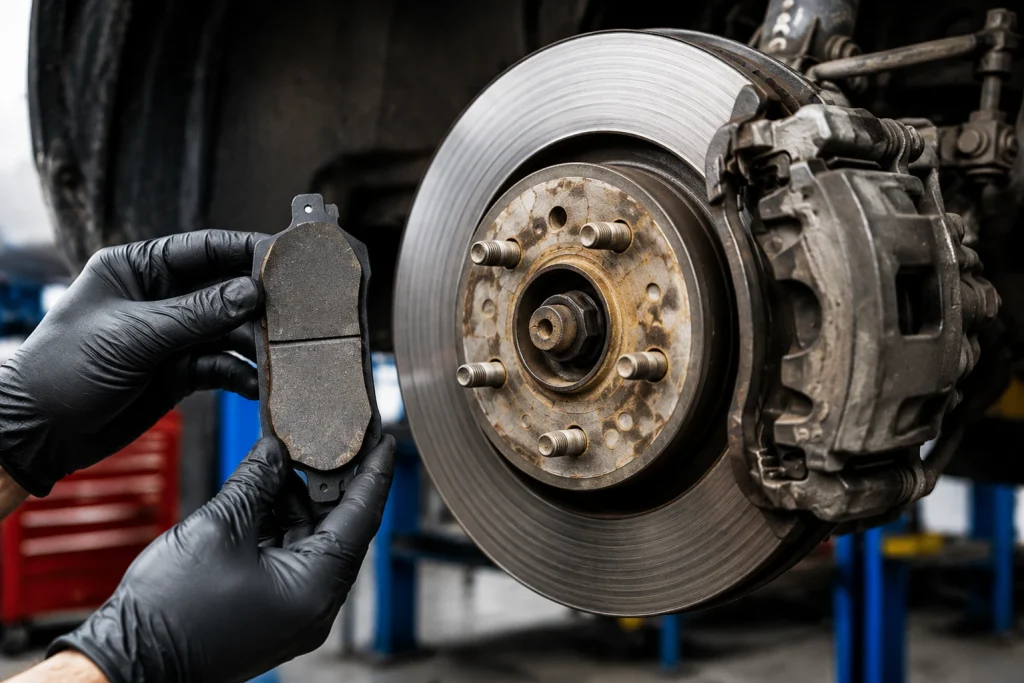
Few car noises get ignored more often than squeaky brakes. You hear that sharp, high-pitched sound when slowing down, assume it is probably nothing serious, and continue driving. After all, if the vehicle is still stopping, how bad can it really be?
The truth is that your brakes are one of the most important safety systems in your vehicle, and unusual noises are often your car’s way of communicating that something needs attention. If you have been searching for “squeaky brakes what does it mean,” you are likely wondering whether the sound is just an annoyance or a warning sign of a bigger problem.
In many cases, a light brake squeal does not mean your brakes are about to fail. It may simply mean your brake pads are getting older, moisture has collected on your rotors, or normal brake dust has built up. However, persistent brake noise should never be ignored because a small issue can eventually turn into expensive repairs or a dangerous driving situation.
At Cherry Capital Auto Clinic, brake concerns are among the most common reasons drivers in Traverse City bring their vehicles in for inspection. Understanding why your brakes are making noise can help you know when it is time to schedule service and when you should stop driving immediately.
Why Do Brakes Start Making a Squeaking Noise?
Your vehicle’s braking system works through friction. When you press the brake pedal, the brake pads clamp against the rotating brake rotors, creating the friction needed to slow down and stop your vehicle.
Because these components constantly experience heat, pressure, and movement, some noise can naturally occur over time. However, a repeated squeaking sound usually means there is some type of change happening within the brake system.
One reason brake squealing is so common is that many brake pads are designed with a built-in warning system. Manufacturers often include a small metal wear indicator inside the brake pad. As the pad material becomes thinner, this indicator contacts the rotor and creates a noticeable squealing sound.
This means the noise is not always a failure; sometimes it is your vehicle warning you before the problem becomes more serious.
The Most Common Reason for Squeaky Brakes: Worn Brake Pads
When people ask “squeaky brakes what does it mean,” worn brake pads are usually the first answer.
Brake pads are designed to wear down gradually. Every time you stop, a small amount of friction material disappears. Eventually, the pads become thin enough that they can no longer perform as effectively as they should.
Before the brake pads become completely worn out, the built-in wear indicator begins making contact with the rotor. This produces the familiar high-pitched squeal many drivers notice.
At this stage, replacing the brake pads is usually a routine repair. However, continuing to drive for too long can allow the brake pad material to wear away completely. Once that happens, the metal backing plate can grind directly against the rotor.
This metal-on-metal contact can damage the rotors, reduce braking performance, and turn a relatively simple brake service into a much more expensive repair.
Could Moisture Be Causing Your Brake Squeal?
Not every squeaky brake problem means your vehicle needs immediate repairs. Sometimes the cause is something as simple as moisture.
If your brakes make noise only during your first few stops in the morning, especially after rain, snow, or a humid night, surface rust may have developed on the rotors.
Brake rotors are made of metal, which means they can develop a very thin layer of rust when exposed to moisture. During your first few stops, the brake pads remove that surface layer, which can create temporary squeaking.
This type of noise usually disappears quickly.
However, if the squeaking continues throughout the day or becomes louder over time, it may indicate another issue that requires professional inspection.
Brake Dust and Road Debris Can Create Unexpected Noise
Every vehicle produces brake dust as the brake pads wear. Over time, this dust can collect around the brake components and contribute to unwanted sounds.
Drivers who regularly travel on gravel roads, construction areas, or roads affected by winter conditions may notice brake noise more frequently because dirt and debris can become trapped between the brake pad and rotor.
Sometimes a thorough brake cleaning can solve the issue. However, cleaning alone will not fix the problem if the underlying cause is worn pads, damaged hardware, or uneven wear.
This is why a proper inspection is important instead of simply treating the noise without identifying the source.
Overheated Brake Pads Can Cause Squeaking Too
Another common cause of brake noise is excessive heat.
Your braking system is designed to handle a significant amount of heat, but extreme conditions can push components beyond their normal limits. Driving in heavy stop-and-go traffic, towing heavy loads, repeatedly braking downhill, or frequently making hard stops can cause brake pads to overheat.
When brake pads become overheated, their surface can become smooth and hardened. This condition is known as glazing.
Glazed brake pads often create squeaking because they cannot create the same consistent friction against the rotor. Some drivers may also notice reduced braking performance, vibration, or a burning smell.
If overheating is the cause, replacing the pads alone may not solve the problem. The entire brake system should be inspected to determine why excessive heat occurred.
Low-Quality Brake Pads May Be the Reason Behind Constant Noise
Sometimes brake squeaking has nothing to do with wear. The type and quality of brake pads installed on your vehicle can also affect noise levels.
Different brake pad materials create different driving experiences. Some lower-quality pads may produce more noise because their materials do not work well with your vehicle’s specific braking system.
Poorly matched brake pads can cause constant squeaking even when the pads are relatively new.
Using manufacturer-recommended or high-quality replacement parts can improve braking performance, reduce unwanted noise, and help your brake system last longer.
Damaged Brake Hardware Can Also Create Squeaking Sounds
Many drivers assume brake noise always comes from the brake pads, but the problem can sometimes involve smaller supporting components.
Brake systems use hardware such as clips, shims, springs, and caliper components to keep everything properly positioned and reduce vibration.
When these parts become worn, damaged, missing, or incorrectly installed, the brake pads may move improperly. This movement can create squeaking, rattling, or clicking sounds.
A complete brake inspection should always include checking these components rather than only replacing the brake pads.
Is It Safe to Drive With Squeaky Brakes?
So, is it safe to drive with squeaky brakes?
In many situations, a light squealing noise does not mean your vehicle is immediately unsafe. If your brakes feel normal, your vehicle stops properly, and the sound is occasional, you may only need a brake inspection soon.
However, ignoring the noise for weeks or months is not a good idea.
Brake problems usually become more expensive when they are left untreated. A brake pad that could have been replaced easily may eventually damage rotors, calipers, and other components.
You should schedule a brake inspection if you notice:
- Squeaking that continues every time you brake
- Increasingly loud brake noise
- Longer stopping distances
- Brake pedal vibration
- Vehicle pulling to one side
- A soft or unusual brake pedal
- Grinding sounds
These signs may indicate a more serious brake problem.
Squeaking vs Grinding: Understanding the Difference
Many drivers confuse squeaking and grinding, but they usually indicate very different situations.
A squeaking sound is often an early warning sign. It may mean your brake pads are wearing down or another component needs attention.
Grinding, however, is much more serious.
Grinding usually means the brake pads have worn completely through and the metal components are contacting each other. This can quickly damage the rotors and reduce your vehicle’s ability to stop safely.
If your brakes are grinding, avoid unnecessary driving and have them inspected as soon as possible.
How Cherry Capital Auto Clinic Diagnoses Brake Noise
Finding the exact cause of brake noise requires more than simply listening to the sound. A professional inspection helps determine whether the issue comes from the brake pads, rotors, calipers, hardware, or another component.
At Cherry Capital Auto Clinic, our technicians carefully inspect the entire braking system, including brake pad thickness, rotor condition, caliper operation, and supporting hardware.
Our goal is not just to eliminate the noise; it is to make sure your braking system is working safely and efficiently.
Every brake service is backed by our 12-month warranty, giving Traverse City drivers confidence that their vehicle has been properly serviced.
You can learn more about our repair options through our services page.
How Often Should Brake Pads Be Replaced?
There is no exact replacement schedule that works for every driver. Brake pad lifespan depends on several factors, including your driving habits, vehicle type, road conditions, and brake pad material.
Most brake pads typically last between 25,000 and 65,000 miles, but some vehicles may need replacement sooner while others can last longer.
Drivers who spend most of their time in city traffic usually wear brake pads faster because of frequent stopping. Highway drivers may get more mileage because they brake less often.
The best way to know whether your brake pads need replacement is through a professional measurement and inspection.
Frequently Asked Questions
Why do my brakes squeak only in the morning?
Morning brake squeaking is commonly caused by moisture or light surface rust on the rotors after the vehicle sits overnight. The noise usually disappears after a few stops.
If the noise continues throughout the day, your brakes should be inspected.
Can new brake pads squeak?
Yes. New brake pads can sometimes make noise because of the material used, improper installation, rotor condition, or the need for proper break-in.
How long can I drive with squeaky brakes?
It depends on the cause. A temporary squeak may not be urgent, but constant brake noise should be checked before it develops into a larger problem.
When should I replace my brake pads?
Brake pads should be replaced when they become too thin, show uneven wear, or begin producing warning noises. A professional inspection is the most accurate way to determine their condition.
Final Thoughts
If you have been wondering “squeaky brakes what does it mean,” the answer is simple: your vehicle is trying to tell you something.
Sometimes the cause is minor, such as moisture or brake dust. Other times, squeaking is an early warning sign of worn brake pads or a developing brake system problem.
The safest approach is not to ignore the noise. Having your brakes inspected early can help prevent expensive repairs and keep your vehicle safe on the road.
If your brakes are making a sound you cannot identify, schedule a brake inspection with Cherry Capital Auto Clinic in Traverse City today. Your brakes are too important to wait until a small problem becomes a major one.